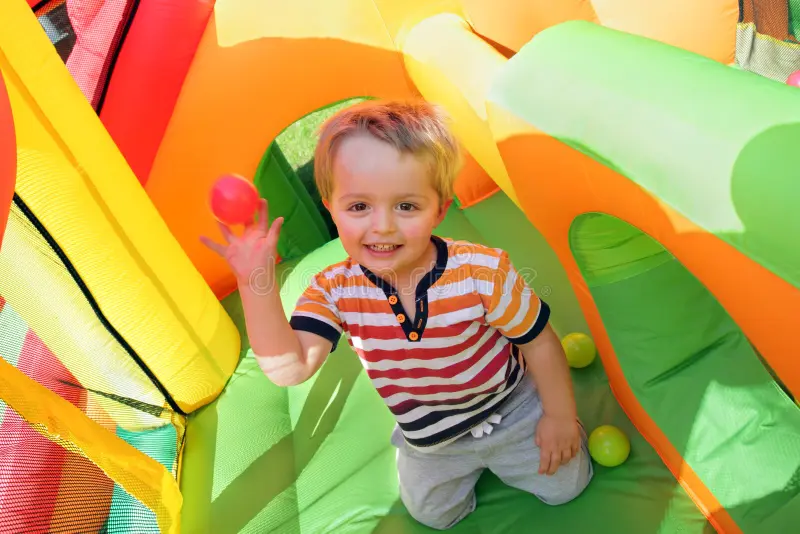
Social development in a low-pressure setting
Soft play is one of the few environments where children from different schools, backgrounds, and friendship groups interact organically — without adults structuring the interaction. This is enormously valuable for mental health:
- Children practise sharing and turn-taking without formal rules
- They learn to read non-verbal social cues in a dynamic environment
- Children who struggle socially at school may find it easier to connect in play
- Shy children can observe and participate at their own pace
- Conflict resolution happens naturally and with low stakes
The role of physical movement
There is a direct, well-established link between physical activity and mental health in children. The NHS recommends at least 60 minutes of moderate-to-vigorous physical activity per day for children aged 5–18. Soft play centres make movement irresistible — children often engage in sustained aerobic activity without even realising it.
Movement regulates the nervous system, reduces cortisol (the stress hormone), and stimulates serotonin production. For children experiencing anxiety, anger, or low mood, physical play can be genuinely therapeutic.
Soft play and children with additional needs
Many soft play centres now offer dedicated sessions for children with autism, sensory processing disorders, or other additional needs — often called “quiet sessions” or “SEND sessions.” These low-stimulus environments remove crowds and noise, allowing children who may feel overwhelmed in everyday settings to enjoy the physical and emotional benefits of play in a safe, welcoming space.
For these children in particular, the benefits to mental health can be profound. Inclusion, joy, and physical freedom are not small things.
What parents can do
- Let children lead — resist the urge to direct their play or coach from the sidelines
- Allow mild risk-taking; the padded environment is designed for it
- Use soft play regularly, not just as a treat — routine matters for mental health
- Notice which activities your child gravitates toward — it reveals a lot
- Celebrate effort and bravery, not just success
The bottom line
Soft play is not a babysitting service or a rainy-day distraction. At its best, it is a rich developmental environment that supports children’s emotional growth, social confidence, and mental wellbeing in ways that are genuinely hard to replicate elsewhere. The next time your child begs to go to the play centre, know that those hours of climbing, sliding, and laughing are doing far more than burning energy — they are building the foundations of a healthy mind.